
October 9, 2026 by Azur Ali
Your landlord will open the oven, pull out the refrigerator drawers, and run a hand along the top of the cabinet doors during your move-out walkthrough. A quick surface wipe won’t pass that inspection. Under Colorado Revised Statutes Section 38-12-103, landlords can legally deduct reasonable cleaning costs when a unit is returned in substantially worse condition than it was at move-in. That’s not a technicality buried in the fine print. It’s the financial reason why move-in/move-out cleaning is worth doing correctly the first time.
This article shows what landlords inspect, why a standard maintenance clean isn’t enough, and how a documented cleaning process protects your deposit. Whether you’re a renter with a walkthrough scheduled, a new tenant moving in, or a property manager coordinating a turnover, this is the scope that matters.
The short answer
During a move-out walkthrough, landlords check the areas that signal whether a unit was cleaned thoroughly or just wiped down. The main categories: appliance interiors (oven, refrigerator, dishwasher), cabinet and closet interiors, bathroom grout and fixtures, baseboards and floor edges, exhaust fan covers, and window tracks. A professional move-out clean covers all of these systematically. A rushed self-clean typically misses most of them.
Why a surface clean isn’t enough for a landlord walkthrough
There’s a real difference between a home that looks clean and one that holds up to close inspection. A maintenance clean keeps visible surfaces tidy. A move-out clean has to meet a different standard entirely, because the person evaluating is looking for specific evidence of neglect, not just a general impression.
Landlords and property managers open things. The oven door. The refrigerator crisper. The cabinet under the sink. They check the areas where buildup collects over months or years of ordinary use, because those areas don’t lie about whether a tenant cleaned or just tidied up before leaving. Countertops that look clean can coexist with a refrigerator that hasn’t been wiped out in two years. The inspection is designed to find exactly that.
Colorado’s security deposit law draws a line between normal wear and tear (not deductible) and conditions that make a unit substantially less clean than when you moved in (deductible). Normal wear includes light scuffs on walls, minor paint fading, and routine carpet compression. What falls outside that category: grease buildup in the oven, residue in cabinet interiors, soap scum on tile grout, and debris in window tracks. These are cleaning failures, and they’re the ones that show up on itemized deduction lists.
That distinction matters practically. If you moved in with a clean oven and you’re leaving one with a year of baked-on residue, the deduction is defensible. The safest position is a professional clean that covers the full scope, documented with photos before you hand over the keys.
What landlords and property managers actually check room by room
The following breakdown shows the scope of a proper move-out clean, based on the areas landlords and property managers consistently inspect during walkthroughs. Think of this as your security deposit cleaning checklist for a Longmont rental. For the full published version, see our article on the 75-point move-out cleaning checklist and the complete 75-point cleaning checklist we use on every visit.
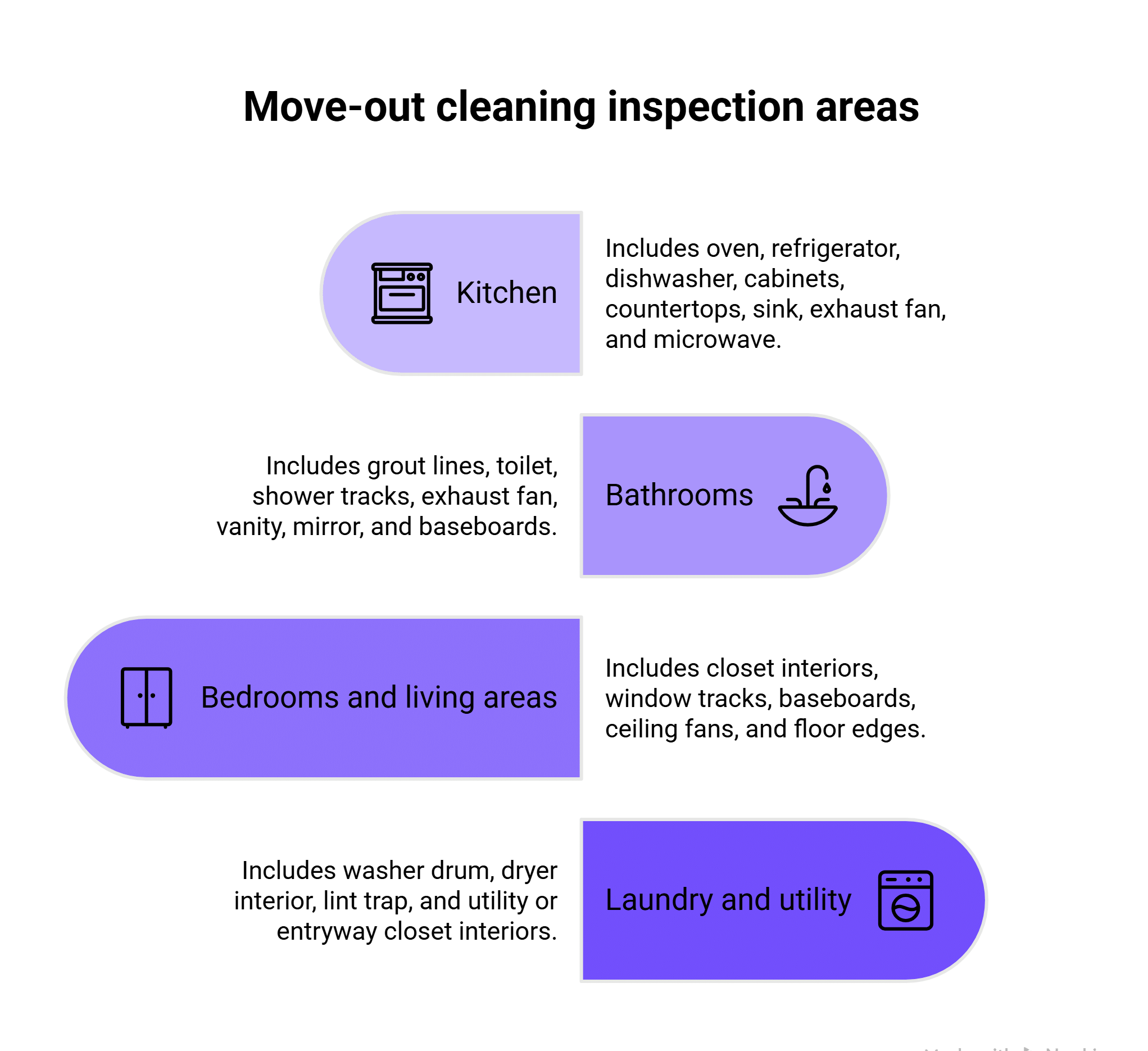
Kitchen
The kitchen takes the most scrutiny. Grease and food residue are hard to fake your way through, and the areas below are the first places most landlords check:
- Oven interior, including racks, broiler drawer, and door seals and gaskets
- Refrigerator interior: shelves, crisper drawers, door bins, and rubber door seal
- Dishwasher interior, filter, and door edges
- Cabinet and drawer interiors, not just fronts
- Countertops, backsplash, and sink basin including the drain
- Exhaust fan or range hood filter
- Under-sink cabinet interior
- Microwave interior if built-in
These are the kitchen items most likely to appear in a deposit deduction dispute. The oven and refrigerator alone account for a disproportionate share of cleaning charges, because most tenants either skip them or underestimate the effort required.
Bathrooms
Bathrooms fail inspections for one reason more than any other: grout. Mineral deposits and soap scum on tile grout lines are the most commonly cited walkthrough issue, and they’re visible to anyone who looks closely at the shower or floor tiles.
- Grout lines on tile walls and floors
- Toilet base, tank exterior, and behind the seat
- Shower tracks and door seals
- Exhaust fan cover and grille
- Inside vanity cabinet and drawers
- Mirror and light fixture
- Baseboards and floor edges near the toilet
One clarification worth noting: grout cleaning (scrubbing surface buildup from grout lines) is within normal professional scope. Grout that has been physically damaged or permanently stained beyond cleaning may require remediation beyond a standard clean. If you’re seeing discoloration that doesn’t respond to cleaning, that’s a separate conversation with your landlord. For mold-related concerns, the EPA’s guidance on mold and moisture is a useful reference. Mold remediation is outside cleaning scope.
Bedrooms and living areas
These rooms feel lower-stakes, but the areas below are exactly what landlords inspect when they’re checking whether a tenant cleaned thoroughly or just made things look presentable:
- Closet interiors: shelves, rods, and the floor of each closet
- Window tracks and sill edges
- Baseboards along all walls
- Ceiling fan blades and light fixture covers
- Inside any built-in drawers or shelves
- Floor edges where carpet meets baseboard or hard floor meets wall trim
Closets and baseboards are the two areas tenants most commonly skip. They’re not visible at a glance, which is exactly why inspectors look there first. A clean closet floor and dust-free baseboard edges signal that the whole unit was cleaned with care.
Laundry, utility, and entryway areas
These spaces are often treated as afterthoughts, but they appear on standard move-out inspection forms:
- Interior of in-unit washer drum and door seal
- Dryer interior and lint trap housing
- Utility closet and shelf interiors
- Entryway closet interior
Your lease determines what areas are your responsibility. Before booking, review your lease to confirm what’s included in tenant cleaning obligations, particularly for garage and outdoor storage spaces.
How the 75-point checklist keeps nothing overlooked
The room-by-room scope above shows what a move-out clean needs to cover. The question is how you make sure nothing gets skipped under time pressure, with a walkthrough scheduled and a deposit on the line.
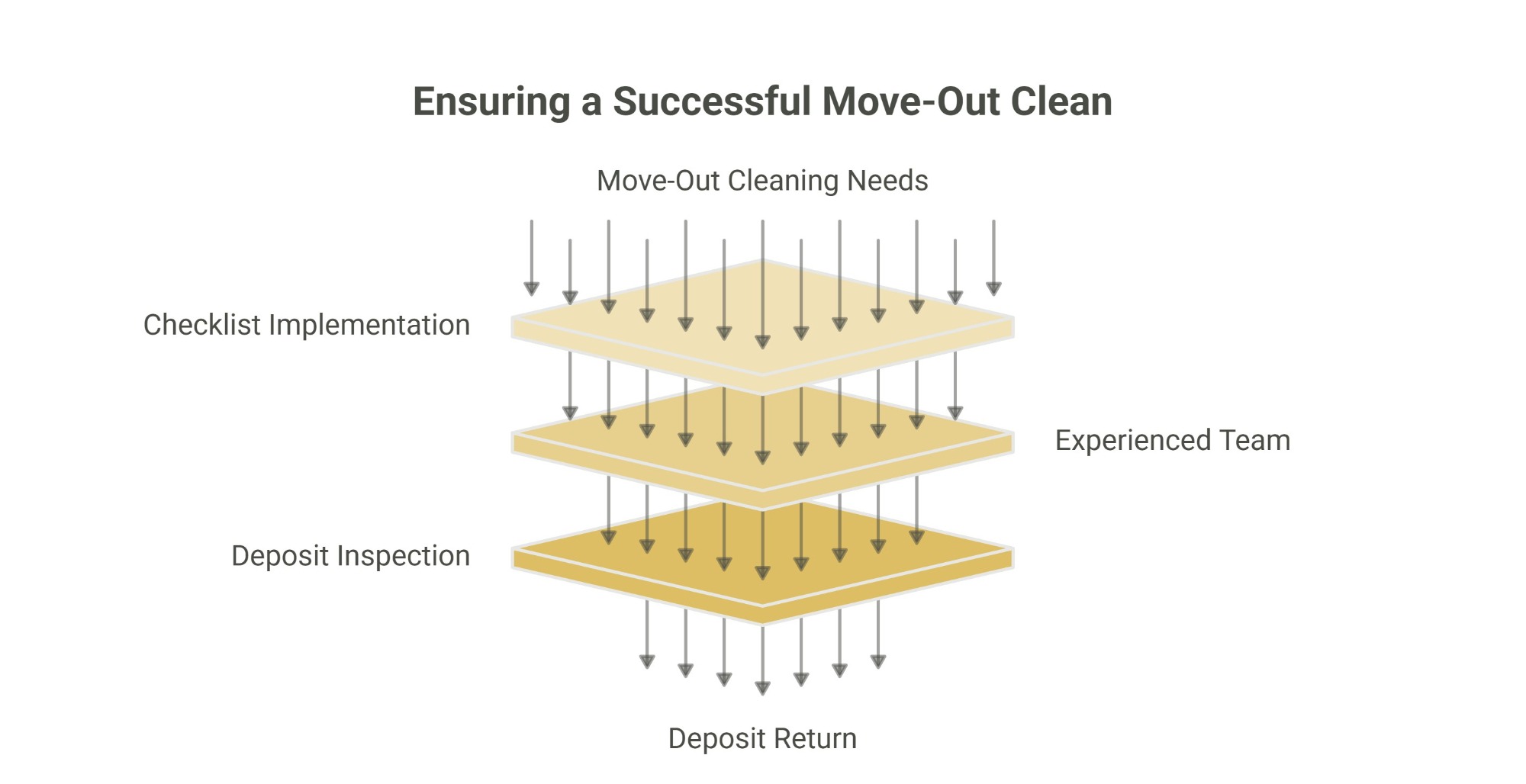
Our answer is a documented 75-point cleaning checklist. Every clean we perform follows this checklist. It’s not a mental list or a general understanding of what “thorough” means. It’s a specific scope that covers the exact areas landlords inspect, and each cleaning job is staffed by an experienced cleaning team that works through it on every visit.
This matters most for move-out cleaning because there’s no second appointment. The walkthrough happens after you’ve handed over the keys. If something gets missed, you find out about it from a deduction notice, not a callback from the cleaning team. A documented checklist is the operational mechanism that turns a service promise into a repeatable result.
The same approach that keeps a residential clean consistent is what allows property managers to count on a reliable turnover between tenants, without following up to confirm what was covered. Consistency comes from the process, not from any individual cleaner’s memory. Learn more about our move-in and move-out cleaning services and what’s included in a full-scope appointment.
If your walkthrough is coming up, you can get a real price in about 60 seconds at the instant estimate page, no phone call required. Or go straight to the booking page and schedule your move-out clean.
Why the cleaner’s experience matters for a deposit inspection
We pay our cleaning professionals 50 to 60 percent of every job. The industry standard is 30 to 35 percent. That gap is the reason we built the pay structure the way we did, and it has a direct effect on you when your deposit is at stake.
Better pay attracts more experienced, more committed cleaning professionals. Every cleaner we work with has a minimum of three years of professional experience and passes a background check before their first appointment. Those aren’t marketing claims, they’re hiring requirements. You can read more about who we are and how 303 Crown Maids was built.
For a move-out clean specifically, experience is the variable that determines quality on the details that matter. An experienced house cleaner in Longmont knows which grout lines need extra attention, how to clean an oven rack without leaving residue, and which areas inspectors focus on because they’ve seen enough walkthroughs to know what gets flagged. The logic is straightforward: for a cleaning at move-out with a real walkthrough scheduled, the quality of the person doing the work isn’t an abstract differentiator. See our verified reviews from customers across Boulder County for context on what that difference looks like in practice.
Move-in cleaning in Longmont: what changes when you’re the new tenant
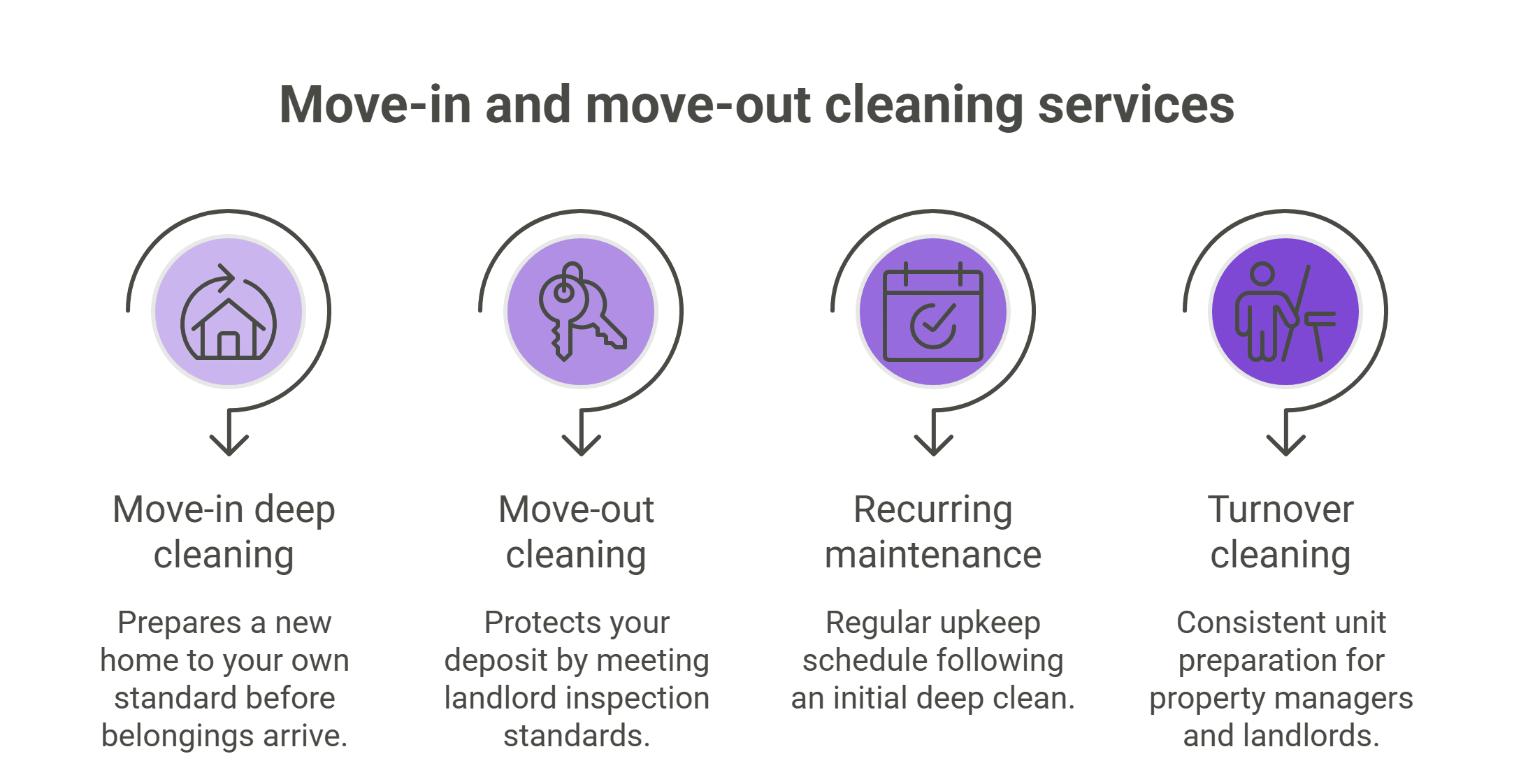
Move-out cleaning protects what you’re leaving. A move-in deep cleaning service prepares where you’re arriving. The scope is similar, but the goal is different: you’re not meeting a landlord’s inspection standard, you’re setting your own standard before your belongings come through the door.
The previous tenant may have passed their walkthrough without meeting your threshold for clean. Landlords evaluate move-out conditions against the unit’s baseline, not against a professional cleaning standard. That means a unit can be accepted at move-out and still have cabinet interiors, bathroom fixtures, or appliance seals that you wouldn’t want to unpack into.
A professional move-in clean covers the same full scope as a move-out clean, from appliance interiors to closet floors to window tracks, approached from a “clean before you settle in” perspective rather than “pass before you leave.” Our deep cleaning services page describes the full baseline scope we use for first-visit and move-in situations. If you’re moving out of one Longmont rental and into another, you may need both: a move-out clean at the old address to protect your deposit, and a move-in clean at the new one before you unpack. Many customers who start with a move-in clean go on to set up a recurring maintenance schedule, because getting the home to a true baseline makes regular upkeep straightforward from that point forward.
What property managers need from a move-out clean
For property managers and landlords in Boulder County, the stakes of a move-out clean are different from a renter’s. The renter is trying to recover a deposit. You’re trying to turn a unit without callbacks from the incoming tenant, without delays to your re-listing timeline, and without cleaning gaps that become your problem to fix.
Longmont’s rental market creates consistent, predictable turnover demand. Front Range relocation activity, CU Boulder rental cycles in the broader Boulder County area, and ongoing residential development in the corridor all contribute to a steady volume of move-outs that need to be turned around quickly and correctly. A cleaning vendor that misses items or creates scheduling uncertainty is a liability you don’t need.
The same 75-point checklist and experienced cleaning teams we use for residential move-out cleaning are what make turnovers consistent for property managers. No mental checklists. No “we’ll get to it.” A documented scope, worked through on every appointment. Learn what landlords and property managers actually inspect during move-out walkthroughs for additional detail on what a thorough turnover clean covers.
We carry $1,000,000 per-occurrence liability coverage and $100,000 fidelity bonding. Every cleaning professional is background-checked. For property managers or landlords with multi-unit turnover needs, contact us at (303) 246-5559 or request a quote and we’ll discuss what consistent turnovers look like for your properties.
Frequently asked questions about move-out cleaning in Longmont
How much does move-out cleaning cost in Longmont?
Pricing is based on your home’s size, number of bathrooms, and the specific services you select. The fastest way to get an accurate number is to use our instant estimate tool. You’ll see a real price in about 60 seconds, no phone call needed.
What does a move-out clean include that a standard clean does not?
A move-out clean covers appliance interiors (oven, refrigerator, dishwasher), cabinet and closet interiors, detailed bathroom scope including grout lines and exhaust fans, and baseboards and floor edges throughout. A standard recurring clean maintains visible surfaces. A move-out clean is built to meet the scope a landlord or property manager will check during a walkthrough.
Does 303 Crown Maids bring all cleaning supplies and equipment?
Yes. Our cleaning teams arrive fully equipped with all supplies, products, and equipment needed for the job. You don’t need to provide anything.
How far in advance should I book a move-out cleaning in Longmont?
As early as your timeline allows, particularly if you’re working around a fixed move-out date. Check live availability on our booking page to see what’s open. Rush or next-day service is available for an additional fee when slots are open.
What is the difference between a move-out clean and a deep clean?
A move-out clean follows a scope specifically oriented to landlord inspection standards, including appliance interiors, cabinet interiors, and closet spaces that may not be included in a standard deep clean. Our deep cleaning services page describes the full deep clean scope, which is often used as a baseline first-visit clean for new recurring customers. For a unit being returned to a landlord, the move-out scope is the right choice.
Is there a contract or long-term commitment required?
No. There are no contracts and no long-term commitments. You can book a one-time move-out or move-in clean without signing up for anything ongoing.

Book a move-out or move-in cleaning in Longmont
Your deposit is real money, and the walkthrough is a real inspection. A professional clean that covers the full scope, from oven interiors to closet floors to grout lines, is a practical financial decision, not a luxury service.
Get a real price in about 60 seconds at the instant estimate page, or go straight to the booking page to schedule your move-out or move-in cleaning. No in-home estimate appointment. No contracts. No phone tag required.
For property managers or landlords with multi-unit or recurring turnover needs, call (303) 246-5559 or request a quote. You can also reach us at [email protected].
We’re a locally owned cleaning company based in Boulder County, and we serve the cities of Boulder, Longmont, Fort Collins, Lafayette, Louisville, Erie, Evergreen, Broomfield, Superior, Gunbarrel, Brighton, Denver, Loveland, Greeley, Windsor, and surrounding Front Range communities.

Written by Azur Ali
Azur Ali is the founder of 303 Crown Maids, a locally owned cleaning company serving Boulder and the surrounding Front Range. The company handles recurring home cleanings, move-in and move-out cleans, short-term rental turnovers, and commercial work across Boulder County. Azur grew up in Boulder and built the company to fix a process he found broken on both sides, for the people booking a cleaning and for the people doing the work.



Stay Updated
We will send you info about our business