
July 29, 2026 by Azur Ali
If you live in Boulder County and clean your home regularly but still deal with allergy symptoms, you’re asking the right question. House cleaning in Boulder does reduce indoor allergens, but only when the right methods are applied consistently.
The EPA is clear on this point: cleaning reduces the allergen load in a home, it doesn’t eliminate it. This article explains what that distinction means in practice, and what a professional home cleaning service actually needs to do to produce real results.
Yes, But Not for the Reasons Most Companies Tell You About
Regular cleaning reduces the indoor allergen load when it’s done with the right tools and the right sequence. Method matters as much as frequency. Vacuuming with a high-efficiency filter, damp dusting instead of dry, and a consistent schedule are what produce real results, not just cleaning more often with whatever is on hand.
What the EPA Actually Says About Indoor Allergens
The EPA’s guidance on indoor air quality is clear about one thing: the air inside a typical home can be two to five times more polluted than the air outside. Common indoor allergens include dust mite debris, pet dander, and pollen tracked in through doors and windows. Each of these settles on surfaces, works into fabric fibers, and becomes airborne again whenever those surfaces are disturbed.
The EPA’s documented position is that regular cleaning can reduce these allergens, though not eliminate them. That distinction matters. Cleaning is one part of a broader approach that also includes ventilation, filtration, and moisture control, but it’s a meaningful part.
The EPA recommends frequent vacuuming of carpets and upholstered furniture, and it notes that vacuums with high-efficiency filters help keep allergens from being pushed back into the air. It recommends damp cleaning of hard surfaces over dry dusting, and washing bedding in hot water to reduce dust mites in soft materials. Allergy organizations like the Asthma and Allergy Foundation of America and the American College of Allergy, Asthma and Immunology go a step further and specifically recommend HEPA-filter vacuums and damp microfiber cloths for the same reasons.
This article is about cleaning methods and allergen reduction, not medical treatment. If you have a diagnosed allergy condition, your physician’s guidance takes priority.
What Regular Cleaning Can and Cannot Do for Allergens
Knowing what cleaning actually accomplishes helps set honest expectations.
| What Regular Cleaning Can Do | What It Cannot Do |
|---|---|
| Reduce surface dust mite allergen concentrations | Eliminate allergens entirely from the home |
| Remove pet dander from floors and upholstery | Replace air filtration or HVAC maintenance |
| Prevent pollen buildup on hard surfaces | Address allergens embedded deep in mattresses or wall cavities |
| Lower total airborne particle load over time with consistent cleaning | Substitute for medical treatment or allergy testing |
The goal is meaningful reduction, not a clinically allergen-free home. That framing comes from the EPA, and it’s the right one. Any cleaning service that promises to eliminate allergens is overstating what cleaning can do.
Why Method Matters More Than Frequency Alone
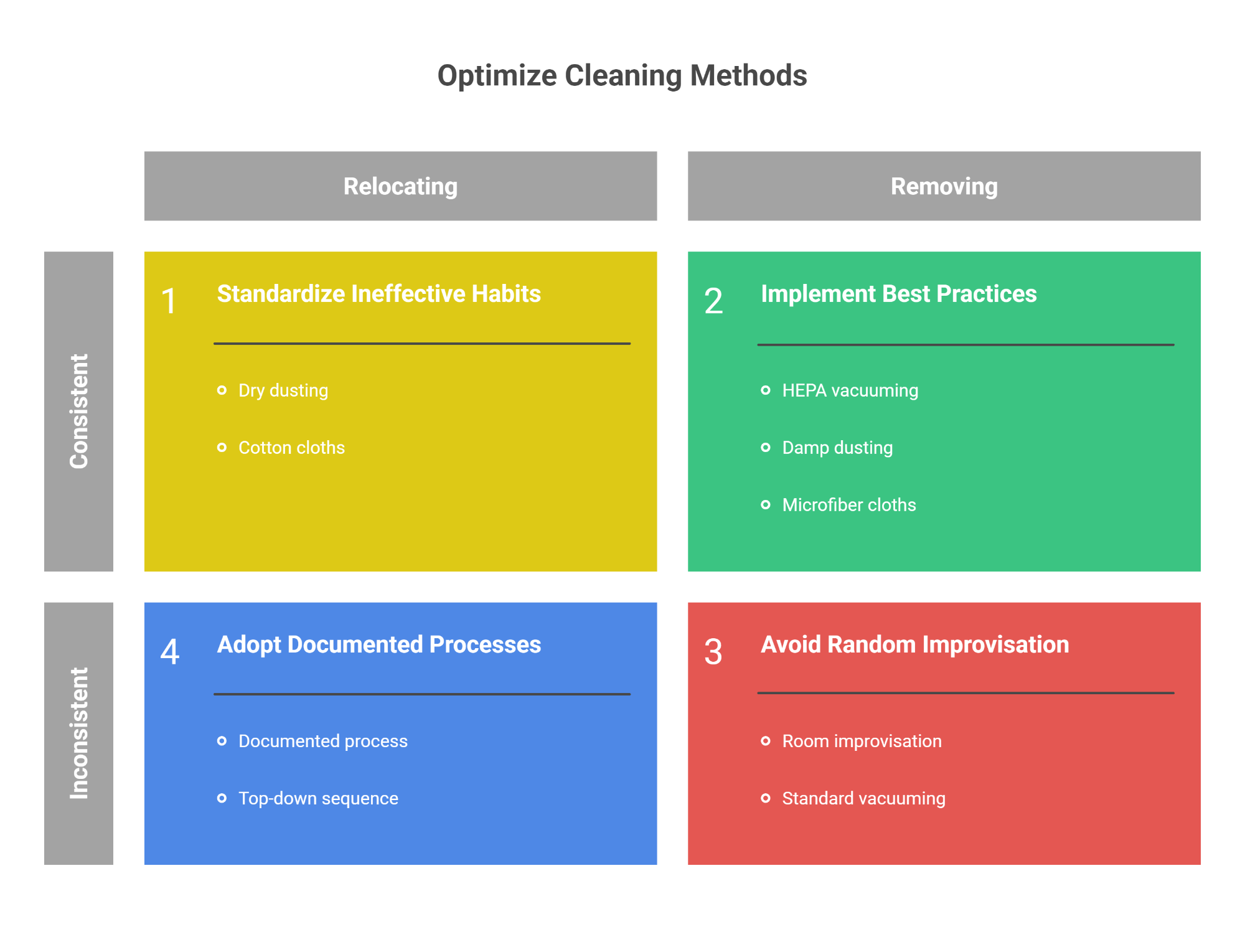
Here’s a problem that comes up often: a household cleans frequently and still can’t get symptoms under control. The issue is usually method, not effort. Cleaning with the wrong tools can temporarily make air quality worse rather than better.
A standard vacuum without a sealed high-efficiency filter pulls debris from the carpet and pushes fine particles back into the air through the motor exhaust. The floor looks cleaner, but the air just got worse.
Dry dusting with a cotton cloth or a feather duster does something similar: it lifts allergens off a surface and into the air, where they stay suspended for hours before settling somewhere else. Reusing the same cloths from room to room carries allergen-containing material through the home rather than removing it.
Sequence matters too. Dusting before vacuuming, and working top to bottom, means dislodged particles fall to the floor and get vacuumed up instead of settling on surfaces that were just cleaned.
High-Efficiency Vacuuming: Why the Filter Specification Matters
A HEPA filter captures 99.97 percent of particles at 0.3 microns, the hardest particle size to trap, and it captures larger and smaller particles at even higher rates. That includes dust mite debris and pet dander, both small enough to pass straight through a standard vacuum bag and back into the room.
The EPA recommends high-efficiency-filter vacuums for this reason, and allergy specialists recommend HEPA specifically.
Microfiber Cloths and Damp Dusting: Capturing Allergens Instead of Moving Them
Microfiber works by creating an electrostatic charge that pulls particles toward the cloth and holds them there, rather than pushing them off the surface. A dry cotton cloth or a feather duster just moves allergens to a different location. Damp dusting takes it a step further, trapping fine particles on the cloth instead of sending them back into the air.
The thread through all of this is simple: the right tool removes an allergen, the wrong one relocates it. But method only helps if it’s applied the same way on every visit, and that consistency comes from trained people following a documented process rather than improvising room to room.
Boulder County’s Allergen Environment Is More Demanding Than Average
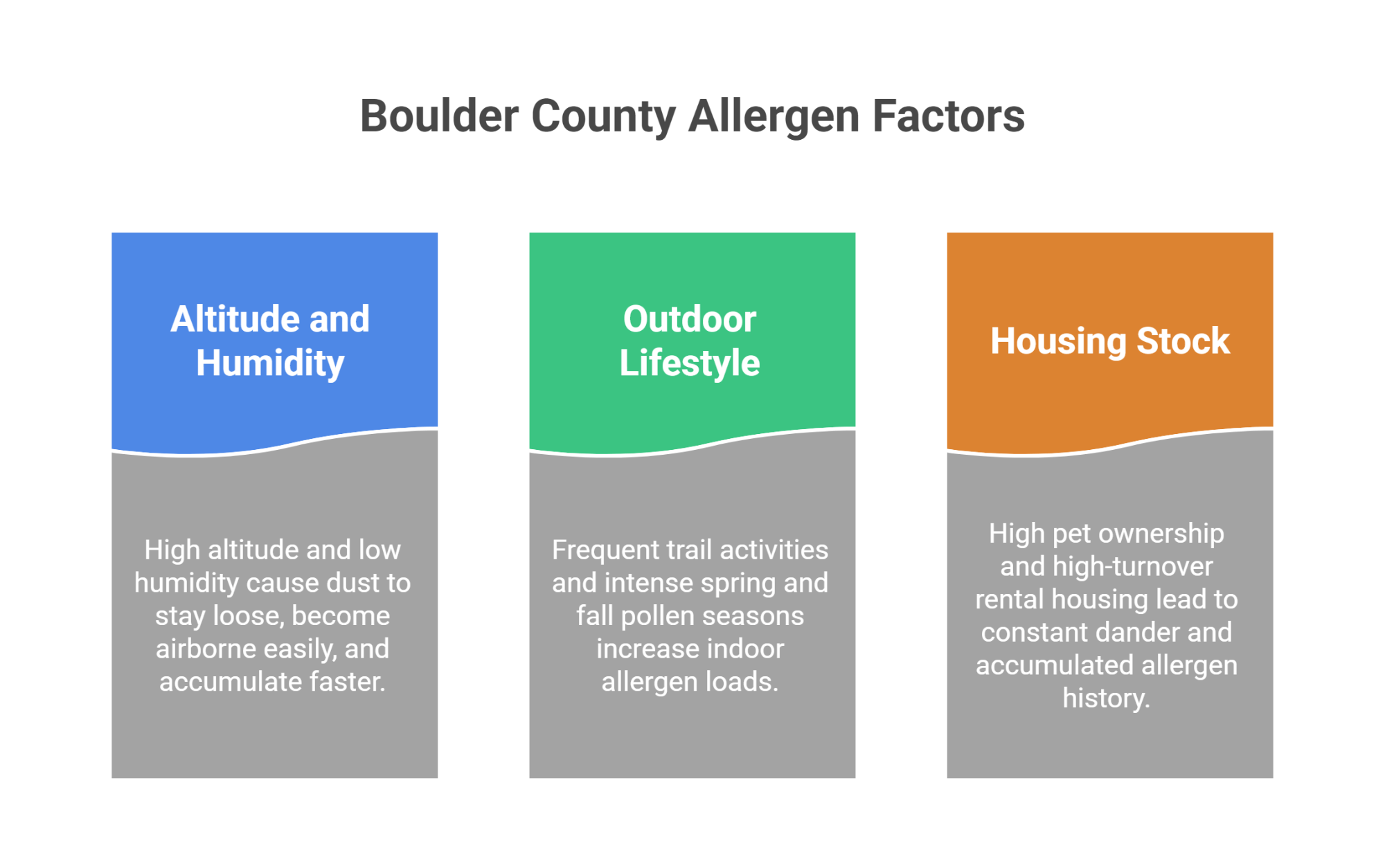
Altitude and Humidity
Boulder County’s high altitude means lower humidity, and lower humidity means less moisture in the air to bind dust to surfaces. Dust stays loose and becomes airborne more easily than it would in a wetter climate. It accumulates faster here than at lower altitudes, and it resettles faster too.
Outdoor Lifestyle and Pollen Load
The outdoor lifestyle adds another layer. After a trail run or a hike with a dog, whatever came in on shoes and fur stays in the entryway, the mudroom, and every surface those shoes and that dog touched. Front Range pollen seasons in spring and fall are intense, and Boulder County households deal with a daily pollen load that many urban areas don’t see at the same level.
Housing Stock
Pet ownership is high here, which makes dander a constant variable rather than an occasional one. The CU Boulder rental population adds its own wrinkle: high-turnover housing often carries accumulated allergen history from previous tenants that a new occupant inherits. Residential cleaning services in Boulder need to account for that starting point.
For residential cleaning in Boulder, local context matters. Methods calibrated for a lower-altitude, lower-pollen environment may not be enough here.
How Our Standard Cleaning Service Maps to EPA Allergen-Reduction Guidance
303 Crown Maids’ standard cleaning service follows a 75-point checklist on every visit. When you line that checklist up against EPA allergen-reduction guidance, the overlap is specific, not coincidental.
On every visit the checklist has cleaners vacuum and mop the floors in every room, which is the task the EPA points to most directly for reducing settled allergens. It covers dusting ceiling fans and blades, clearing cobwebs, dusting lamps and shades, and wiping down counters and surfaces, the work that keeps dust from building up and resettling. In the kitchen and bathrooms it covers sanitizing sinks and countertops, disinfecting toilets, and scrubbing tubs and showers, the moisture-prone areas the EPA flags for mold. Light switches and door knobs are disinfected on every visit as well.
Sequence is where experience shows. Working top to bottom, dusting before vacuuming, and not recontaminating surfaces that were already cleaned is the difference between removing an allergen and relocating it. Every cleaner we work with has a minimum of three years of professional experience, is personally interviewed, and passes a background check. That experience requirement is what produces consistent technique. A service that sends whoever is available that day doesn’t get the same result.
See the full cleaning checklist for the complete room-by-room breakdown.
Get an instant quote and see your price in about 60 seconds.
Recurring Service Is How Allergen Control Actually Works Long-Term
Repetition and Turnover Cycles
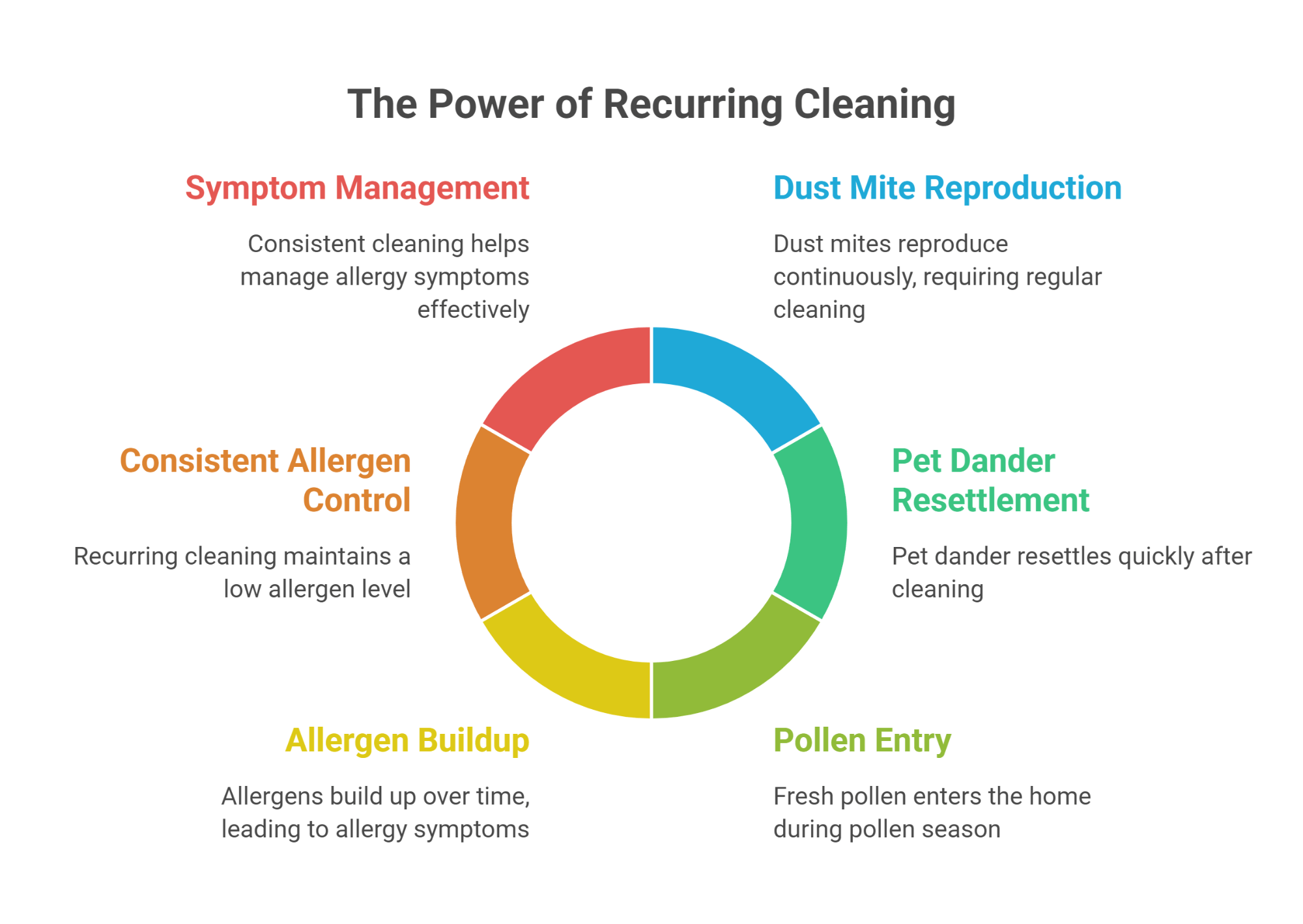
Dust mites reproduce continuously. Pet dander resettles within days of being removed. During pollen season on the Front Range, fresh pollen enters the home every time a door opens. A single deep clean resets the baseline, but allergens rebuild on a schedule that a once-a-month clean can’t keep pace with.
Weekly or bi-weekly recurring cleaning in Boulder County works because it addresses allergens before they build up to problem levels. The house never gets ahead of the cleaning. That’s a different outcome than waiting six weeks between visits and starting over each time.
Inconsistent cleaning creates its own problem for allergy sufferers: allergen loads swing unpredictably between visits, which makes symptom patterns harder to manage. Kelly McDermott, a 303 Crown Maids customer, wrote that the team “cleaned things better than I believed possible.” That reaction reflects how often the industry standard falls short, and what a consistent method produces when it’s applied every visit.
Weekly house cleaning, done with the right tools, is the structure that holds allergen load steady over time.
Book your recurring clean and see your price in about 60 seconds.
When to Start With a Deep Clean Before Recurring Service
If a home hasn’t been professionally cleaned in a while, or carries significant allergen buildup from previous occupants, starting with a deep cleaning service visit makes the recurring schedule more effective from day one.
A deep clean handles buildup that a standard maintenance clean isn’t designed for: grout lines, inside cabinets, behind appliances, and accumulated debris in corners and along baseboards. It resets the starting point so recurring visits maintain a lower allergen load instead of trying to catch up each time.
Skip that first step and every standard clean spends time on accumulated buildup instead of maintaining a clean baseline. For households with allergy concerns, that difference in starting condition is worth addressing directly.
Frequently Asked Questions
Does professional cleaning actually help with allergies?
Yes. There’s no contract. You can switch from bi-weekly to monthly or weekly anytime by updating your schedule in your account or calling (303) 246-5559.
How often should I have my home professionally cleaned if I have allergies?
Weekly or bi-weekly is the most effective schedule for keeping allergen levels down. Allergens rebuild between visits, and a monthly cadence often isn’t frequent enough to stay ahead of that. Monthly is better than nothing, but the people who see the clearest difference are usually on a bi-weekly or weekly schedule. See what’s included in a standard cleaning for the full task breakdown.
What allergens does regular cleaning reduce?
Done with proper methods, regular professional cleaning reduces dust mite debris, pet dander, pollen that has settled on hard surfaces, and mold spores in kitchens and bathrooms. These are the primary indoor allergens the EPA addresses in its household guidance.
Will cleaning eliminate my allergy symptoms?
No, and any service that claims it will is overstating. The EPA’s documented position is that cleaning reduces allergen load, it doesn’t eliminate allergens from the home. Symptom relief depends on many factors, and cleaning is one part of a broader approach that includes filtration, ventilation, and medical guidance.
What makes professional cleaning different from cleaning myself?
High-efficiency vacuums, consistent damp-cloth technique, proper room-by-room sequencing, and cleaners with enough experience to apply the same method every visit. Most DIY cleaning misses one or more of these, not from lack of effort but from lack of the right equipment and a documented system.
The Bottom Line on Cleaning and Allergen Reduction
EPA guidance confirms that regular cleaning with the right methods reduces the indoor allergen load in a meaningful way. Method matters more than frequency alone, and Boulder County households face above-average allergen pressure from the dry climate, heavy pet ownership, and an outdoor lifestyle that brings trail dust and pollen inside daily.
Our 75-point checklist and cleaning methods line up with what the EPA recommends. A recurring schedule holds that reduction in place over time instead of letting allergens rebuild between visits.
If you want to see what this looks like for your home, get an instant quote in about 60 seconds. Or read more about our standard cleaning service and see what our Boulder County customers have to say.

Written by Azur Ali
Azur Ali is the founder of 303 Crown Maids, a locally owned cleaning company serving Boulder and the surrounding Front Range. The company handles recurring home cleanings, move-in and move-out cleans, short-term rental turnovers, and commercial work across Boulder County. Azur grew up in Boulder and built the company to fix a process he found broken on both sides, for the people booking a cleaning and for the people doing the work.



Stay Updated
We will send you info about our business